
Get Healthy!
- Posted March 26, 2026
Can You Drink Enough Fluids To Prevent Kidney Stones? Maybe Not, New Study Says
Drinking lots of fluids is recommended for warding off kidney stones, which can cause intense and unbearable pain.
But it’s very difficult – and possibly impossible – for people to down enough fluids to prevent kidney stones, a major new study says.
Patients with kidney stones were able to hydrate more and increase their urine output after being equipped with Bluetooth-enabled “smart bottles” that measured their fluid intake, researchers recently reported in The Lancet.
Despite that, these patients continued to struggle with kidney stones at about the same rate as others not provided added help with hydration, researchers found.
“The trial results show that despite the importance of high fluid intake to prevent stone recurrence, achieving and maintaining very high fluid intake is more challenging than we often assume for people with urinary stone disease,” co-senior researcher Dr. Charles Scales said in a news release. He’s an associate professor of urology and population health sciences at Duke University School of Medicine in Durham, North Carolina.
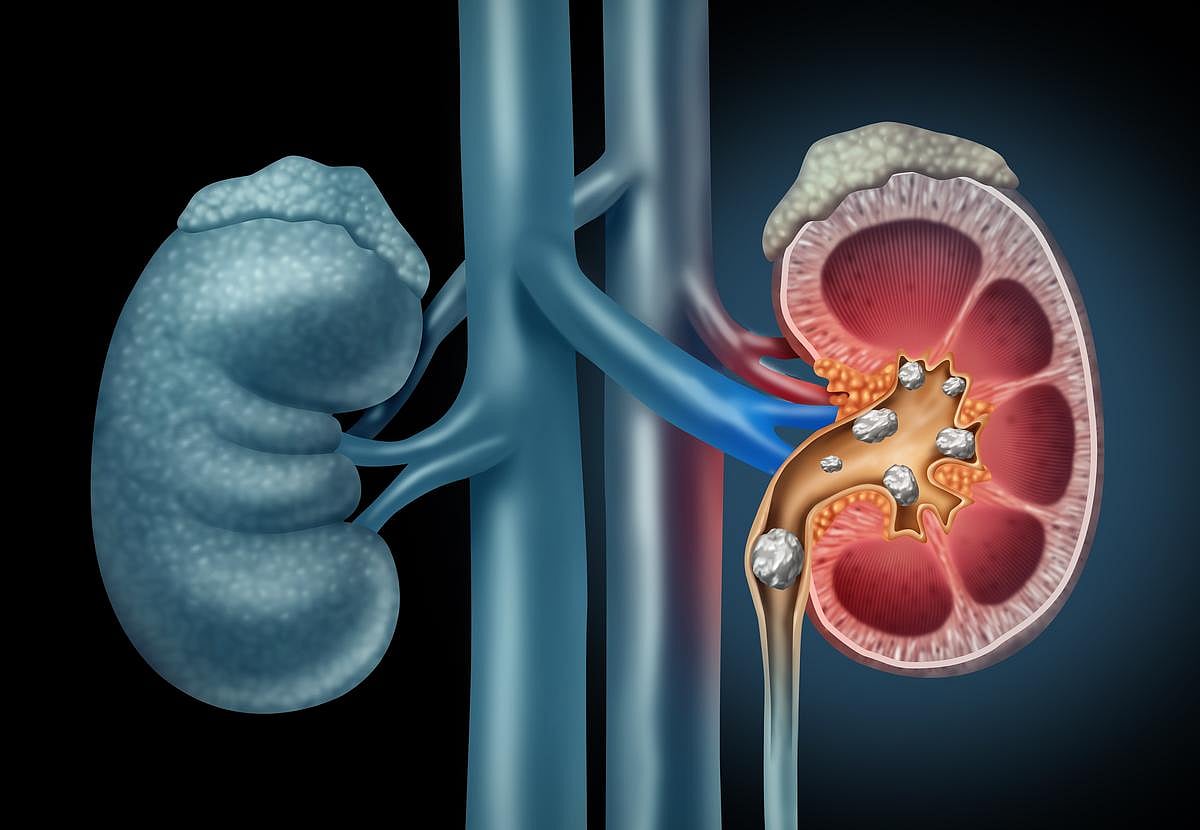
Kidney stones are hard lumps that develop from the minerals and chemicals found in urine, according to the National Kidney Foundation.
People who develop kidney stones can suffer from extreme pain in their side or back, blood in their urine, nausea or vomiting, or fever and chills, the foundation says.
About 1 in every 11 people in the U.S. is affected by kidney stones, and nearly half will experience them more than once, researchers said in background notes.
Stones form more easily when people don’t drink enough water and their urine becomes concentrated, the foundation says.
To see if more could be done to help kidney stone patients, researchers developed a comprehensive hydration program based around the smart water bottles.
In the program, each patient was given a personalized hydration goal to reach a urine output of at least 2.5 liters per day.
To reach that goal, patients were given smart bottles that tracked their fluid intake and were rewarded $1.50 every day they drank their prescribed amount. The patients also were provided reminder texts and health coaching to promote hydration.
For the new study, researchers recruited 1,658 teenagers and adults with kidney stones at six U.S. hospitals and randomly assigned half to participate in the hydration program.
The other half were encouraged to drink more and given a smart water bottle, but didn’t get the financial incentives or added coaching provided by the program.
People in the hydration program wound up drinking more fluids and producing more urine over the two years they were followed, compared to the control group, the study found.
However, there was no difference in either kidney stone growth or the occurrence of new kidney stones between the two groups.
The results indicate that hydration targets may need to be even more individually tailored, based on factors like age, size, lifestyle and health, researchers said.
“Rather than asking every patient to meet the same fluid goal, we should determine who benefits from which targets, understand why adherence breaks down, and build interventions -- behavioral and medical -- that reliably reduce stone recurrence,” co-senior researcher Dr. Gregory Tasian, an attending pediatric urologist at the Children’s Hospital of Philadelphia, said in a news release.
If hydration can’t help as much as hoped, then new treatments will be needed to help keep minerals dissolved in urine, researchers added.
"Kidney stone disease is a chronic condition, punctuated by unpredictable, sometimes excruciatingly painful episodes that can disrupt work, sleep, productivity and life in general,” said lead researcher Dr. Alana Desai, a urologist at Washington University in St. Louis, Missouri.
“Most people would appreciate a simple means to reduce their chances of experiencing another event,” she added in a news release.
More information
The National Kidney Foundation has more on kidney stones.
SOURCE: Duke Health, news release, March 19, 2026


